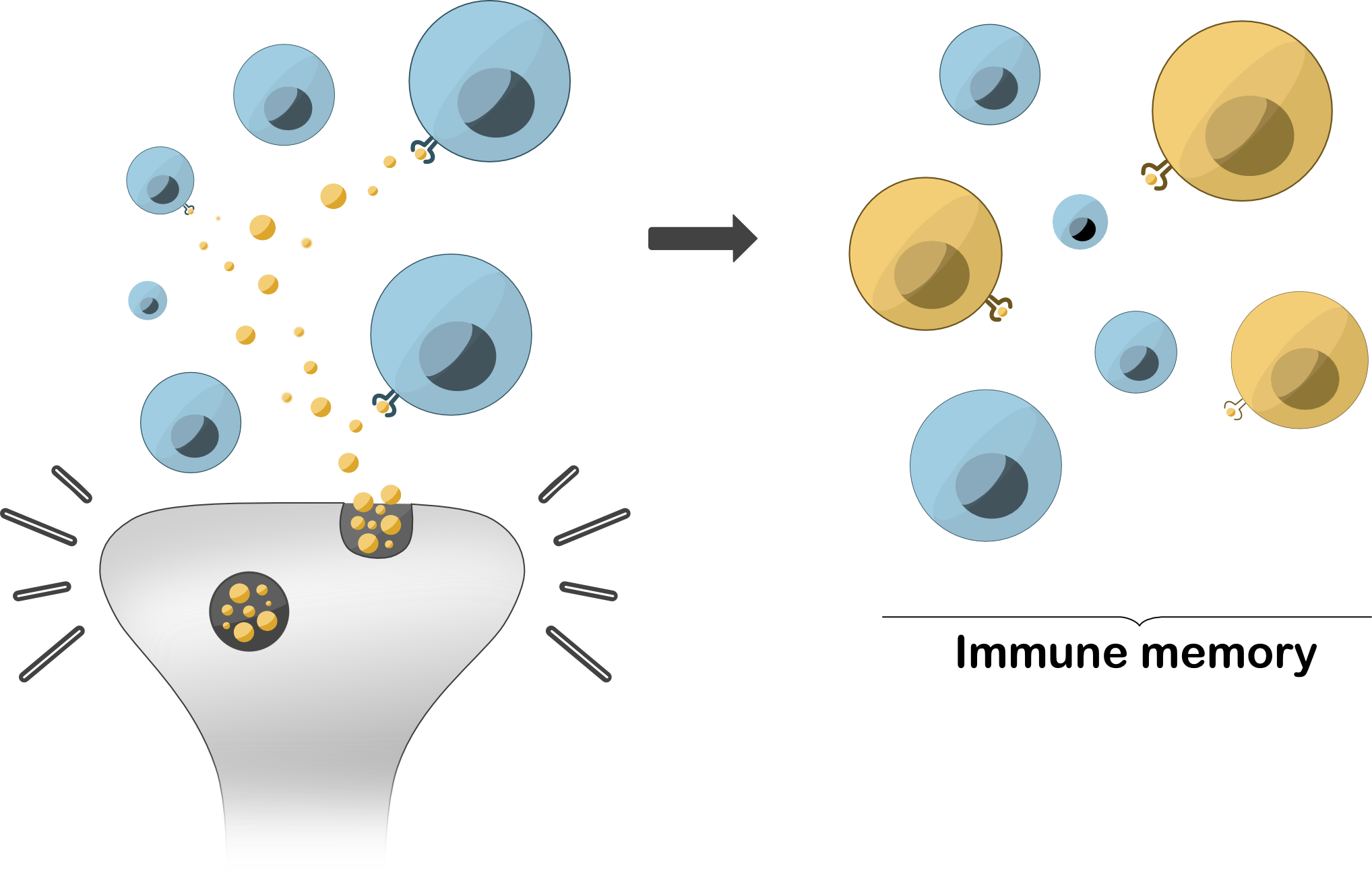
Nociceptors, our body’s pain-triggering neurons, don’t just detect danger; they actively shape immune responses. In acute conditions like infections or allergies, nociceptors release neuropeptides that guide immune cell function. We are investigating if acute nociceptor activation can leave a lasting imprint on tissue immunity and whether neuroimmune “memory” influences how the body reacts to future challenges.
Neuronal control of tissue immunity
2. Somatosensory Encoding of Immune Cues
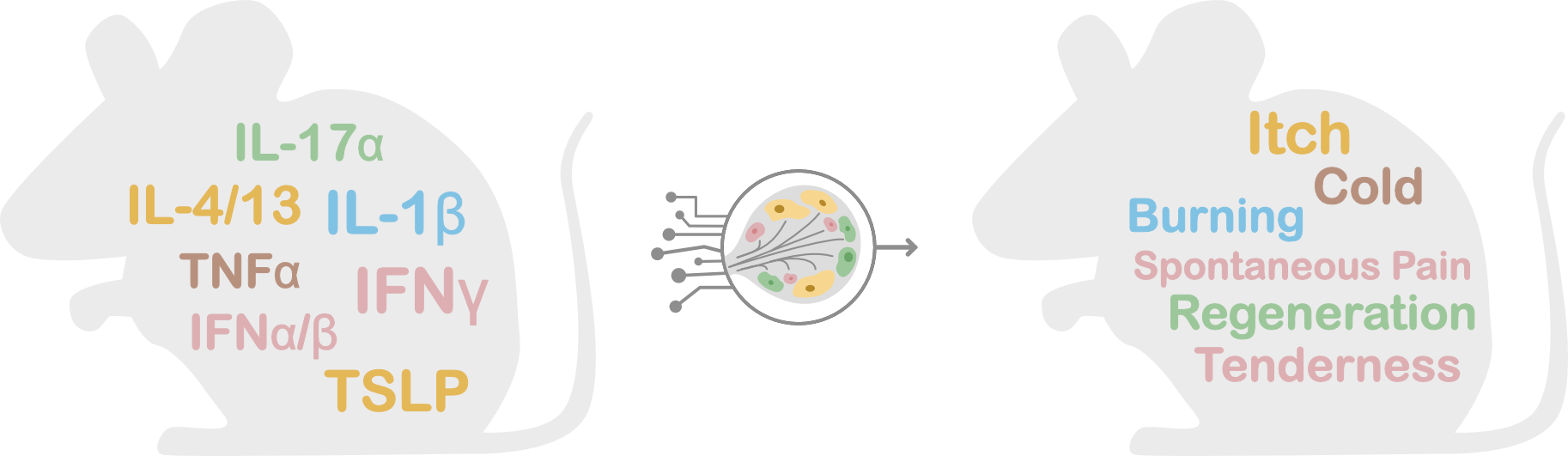
Neurons in the dorsal root ganglia can detect a vast array of immune signals, but how do these neurons distinguish between different immune cues and generate meaningful behavior? Using intersectional mouse genetics, cutting-edge animal behavior technologies and live neuronal imaging, we are uncovering the “logic” that neurons follow to interpret the immune system.
Related publications: Nociceptor-immune interactomes reveal insult-specific immune signatures of pain
3. Immune mechanisms of chronic pain
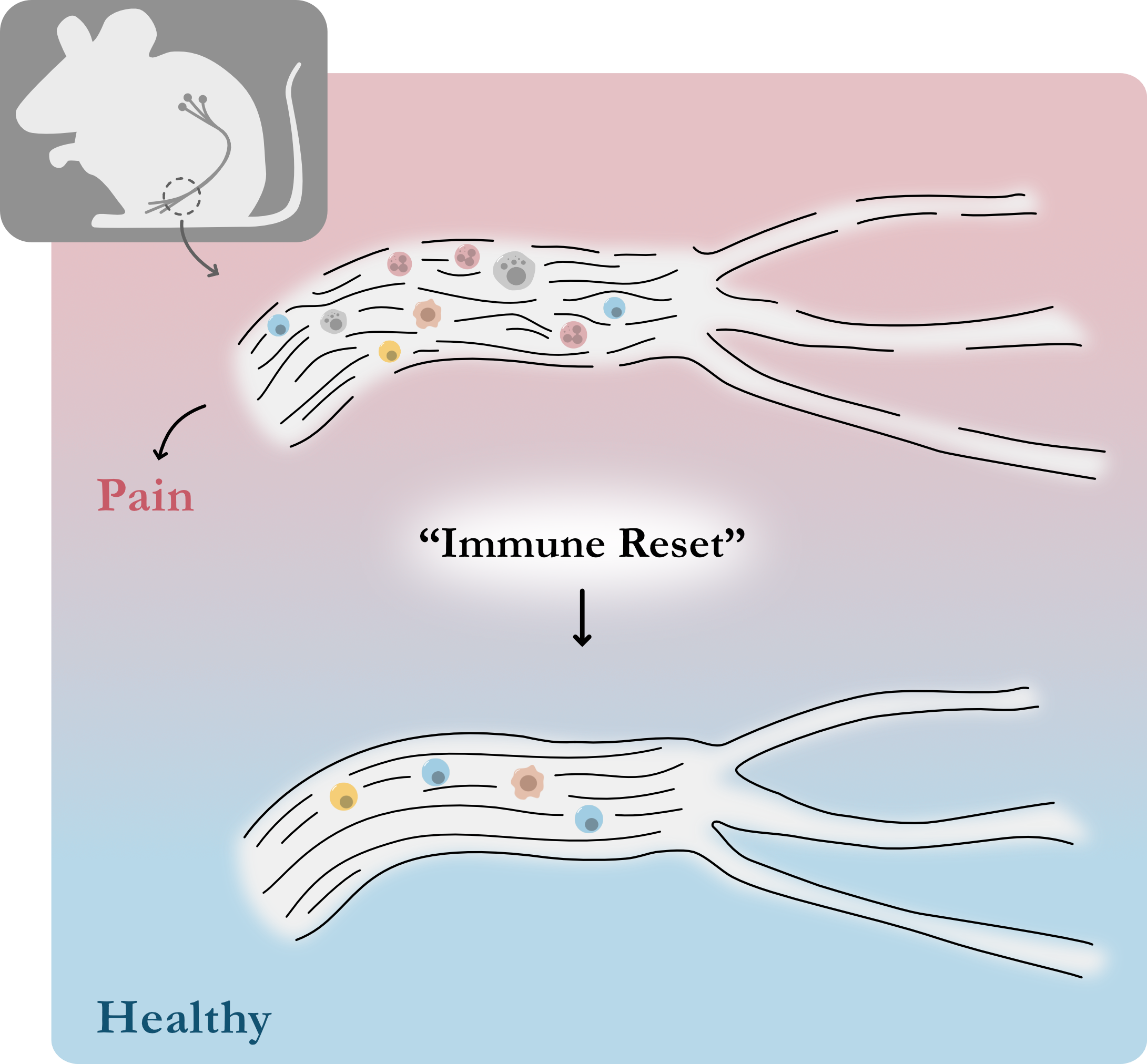
Chronic pain after nerve injury is traditionally attributed to malfunctioning sensory neurons. However, evidence suggests that non-neuronal cells in the peripheral nerves, particularly immune cells, play a critical role regulating pain. We are mapping the immune atlas of human and mouse nerves in healthy and painful states to decipher immune mechanisms that contribute to the development and maintenance of neuropathic pain. Our goal is to “reset” the immune system to achieve long-term analgesia.
Related publications: Macrophages protect against sensory axon degeneration in diabetic neuropathy.